





The DeFi sector is poised for a significant boost from the tokenization of renewable resources such as solar energy, according to Stani Kulechov, founder of Aave.
https://t.co/Ycaj8rVbjn
— Stani.eth (@StaniKulechov) February 15, 2026
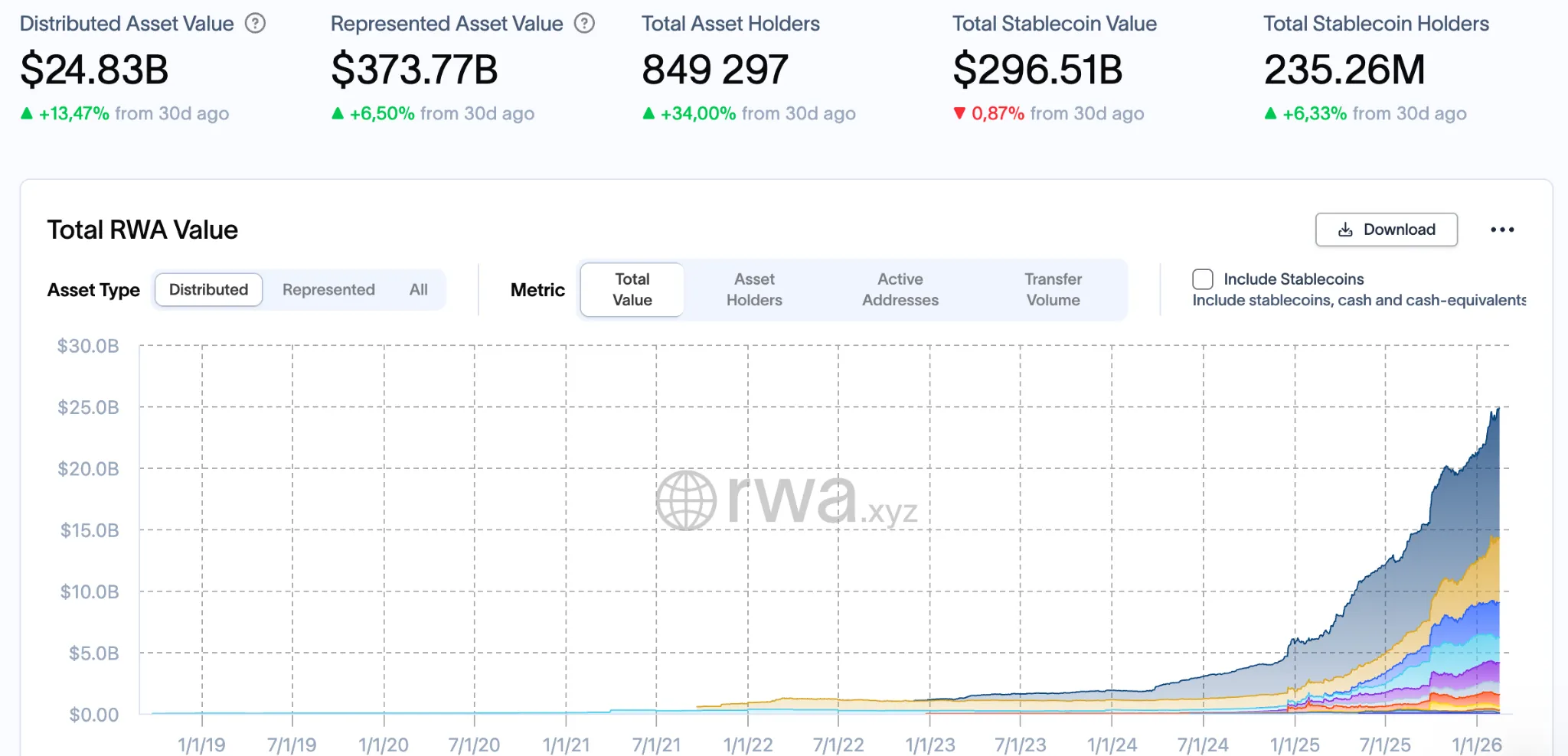
Currently, the RWA market is valued at approximately $25 billion, dominated by U.S. Treasury bonds, real estate, and private credit. Kulechov described these assets as scarce and predicted further growth in the segment.
However, the entrepreneur sees the main potential in digitizing so-called “abundant assets.” In addition to solar energy, these include:
- energy storage systems (batteries);
- robotics;
- vertical farms and synthesized food products;
- semiconductors;
- 3D printing.
According to Kulechov, these areas will offer higher returns compared to scarce resources, which are on a “low-margin and declining profitability path.”
“Capital is eager for new types of collateral, and the world is ready for the transformation that on-chain lending can capture and accelerate,” he noted.
He forecasts that the RWA market will reach $50 trillion by 2050, with solar energy alone accounting for $15 trillion to $30 trillion.
How will it work?
Kulechov provided an example of a tokenization scheme for a new class of assets:
- an investor funding solar energy startups tokenizes a $100 million project;
- then uses this asset as collateral to borrow $70 million in DeFi protocols for reinvestment in new projects;
- users gain access to an instrument with “scalable returns and low risks,” backed by real assets.
“An investor can buy tokenized solar energy, hold it for three years, sell it for a profit, and immediately reinvest in a new development,” he explained.
The key advantage of this model is capital efficiency. While traditional infrastructure locks up funds for decades, RWAs enable continuous trading.
Earlier, ARK Invest predicted a 50,000% growth in the tokenized assets sector by 2030.