






In February, Cango’s operational hashrate averaged 34.55 EH/s, with 50 EH/s of deployed capacity.
📢 $CANG February Computing & Energy Operations Update:
In February, we produced 454.83 BTC, with deployed hashrate maintained at 50 EH/s as of month-end. Our total Bitcoin holdings now stand at 3,313.4 BTC.
As we move from pure-play Bitcoin mining to global AI and… pic.twitter.com/CtDgNc64fO
— CANGO (@Cango_Group) March 6, 2026
The firm attributed the roughly 30% shortfall from nameplate to ‘downtime related to optimisation and fleet relocation’. Reasons for shutdowns included:
- a review of hosting agreements;
- equipment upgrades;
- the sale of some rigs;
- shifting operations to regions with lower electricity costs.
Cango mined 454.83 BTC in the month. As of 28 February, holdings stood at 3,313.4 BTC.
After mining difficulty rose on 19 February by nearly 15%, the hashprice fell from the $33-35 per PH/s per day range to below $30. The metric briefly recovered in early March as the leading cryptocurrency’s price moved above $70,000.
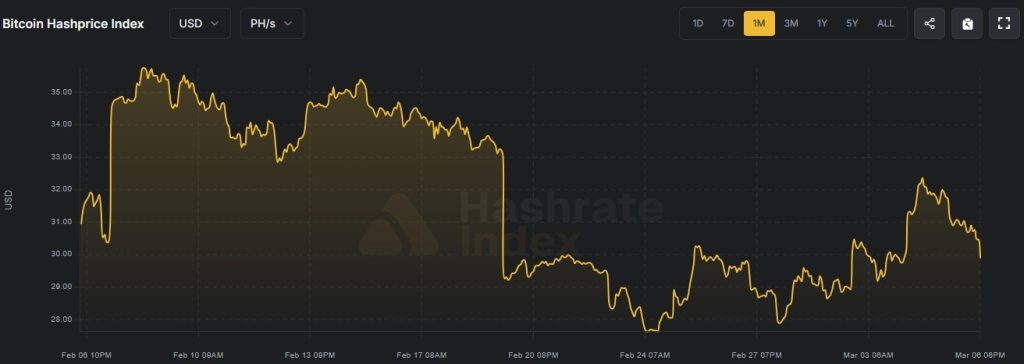
Meanwhile, the average hashcost for Cango’s equipment is around $40 per PH/s per day, according to experts at TheEnergyMag.
The fleet consists largely of Bitmain Antminer S19 XP ASICs installed at sites operated by the manufacturer. This model allowed the company to scale its hashrate to 50 EH/s without spending capital and time on building data centres, but left it exposed to hosting tariffs, the outlet noted.
According to the Bitmain-affiliated pool Antpool, at an electricity price of $0.08 per kWh an S19 XP runs at a loss.

In early February, Cango sold 4,451 BTC on the open market — about 60% of its accumulated crypto reserves. The company announced plans to expand into AI services.
Bitcoin mining difficulty pauses its rise
On 5 March, the latest difficulty adjustment left mining difficulty virtually unchanged, up 0.45%.
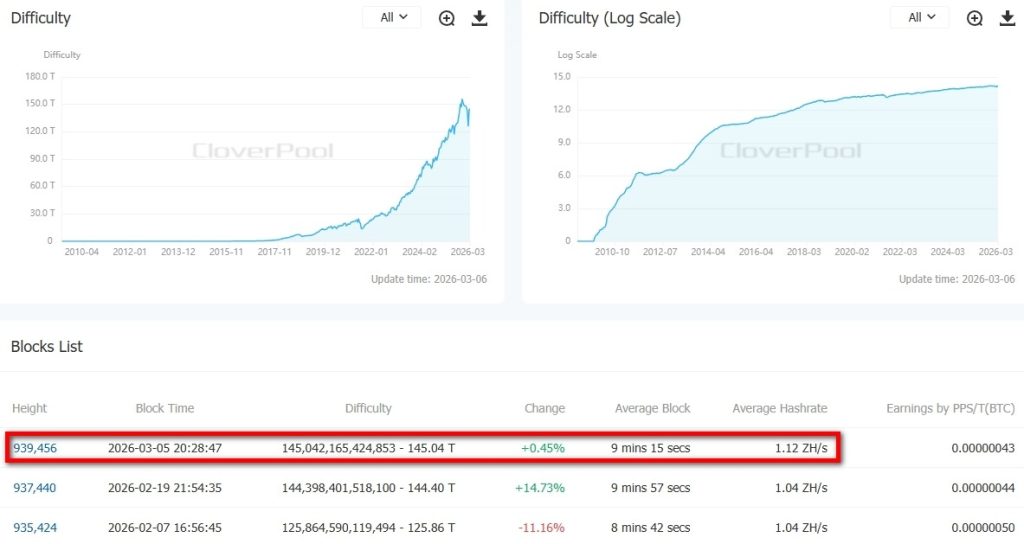
The metric reached 145.04 T, 7% below the all-time high of 155.97 T recorded in late October 2025.
Since that month, Bitcoin’s hashrate (seven-day moving average) has been trending lower. From a peak of 1.15 ZH/s, computing power fell to 1.02 ZH/s. The deep drop and swift rebound in February were caused by the aftermath of a winter storm in the United States.
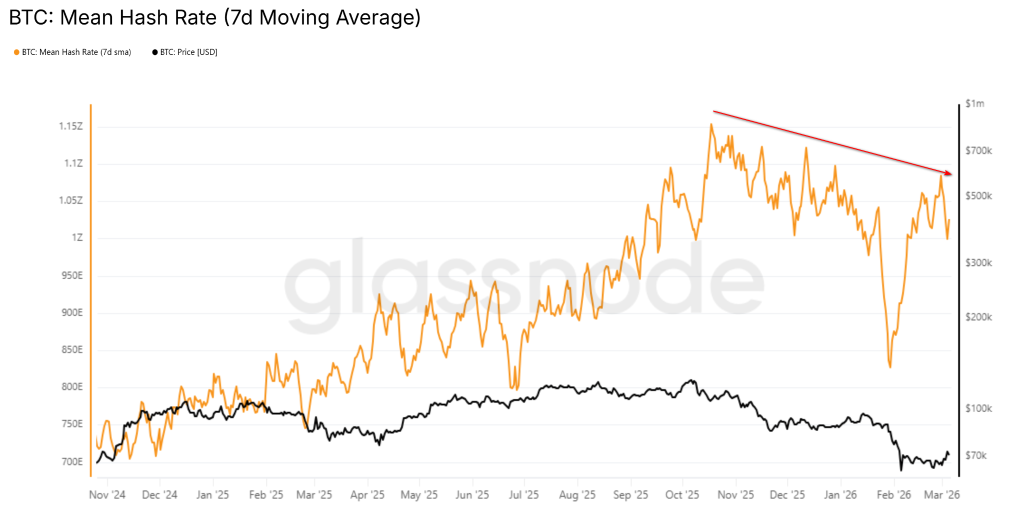
With difficulty essentially unchanged, mining profitability over roughly the next two weeks will be determined by the market price of bitcoin. The current forecast for the metric is an increase of less than 1%.
Over the past five months, public mining companies have sold more than 15,000 BTC, according to TheEnergyMag. Analysts expect selling to intensify.