Miners Extract the Last Bitcoins
The Bitcoin network has already mined 20 million coins, and the issuance of the remaining million will take over a century.
Historically, the deflationary model and halvings have driven prices up, but now we see the familiar four-year cycles beginning to break, and the real breakeven point for mining, considering equipment, is moving beyond $100,000.
The most unexpected trend of the moment is the total reorientation of miners towards the artificial intelligence sector. Companies are massively selling off crypto reserves to repurpose their farms for neural networks, despite the colossal difference in costs: $10 million per megawatt for AI with its liquid cooling and backups versus $400,000 for cryptocurrencies.
For those seeking an alternative to energy-intensive farms on Earth, an unexpected solution emerges: orbital mining. Launching satellites with cheap ASIC chips will allow Bitcoin mining using infinite and free cosmic solar energy.
US Treasury Advocates for Privacy
The US Treasury has unexpectedly recognized crypto mixers as a tool for protecting the constitutional right to privacy, but behind this appealing phrase from a 34-page report lies a bureaucratic maneuver. The regulator is merely forced to change its rhetoric amid trials of Tornado Cash developers, while simultaneously promoting the idea of an “innovative approach to AML/KYC” for custodians.
anti-money laundering/Know Your Customer
It is highly likely that independent decentralized smart contracts will be replaced by corporate solutions — so-called “licensed mixers.” The average citizen will not notice the trick when anonymizing transfers, but outside the narrow permitted framework, their entire financial history will automatically be sent to special services.
Essentially, we are witnessing a repeat of the Patriot Act scenario, where under the guise of protecting the state, total surveillance of law-abiding users is quietly legalized.
Binance Will Not Be Tried for Terrorism Financing
The lawsuit against Binance and Changpeng Zhao for terrorism financing has been dismissed. The plaintiffs openly attempted to capitalize on last year’s criminal fine of the exchange of $4.3 billion, but the court recognized the platform as merely an independent commercial intermediary.
This news finally dispels the myth that digital assets are the perfect money for wrongdoers. In reality, cryptocurrency remains an extremely inconvenient tool for criminals: public blockchains are transparent and are thoroughly monitored by analysts like Chainalysis.
Moreover, to purchase or cash out funds, terrorists inevitably face strict KYC procedures on centralized gateway platforms, reducing the share of cryptocurrency use in illegal activities to negligible percentages compared to the traditional banking system and cash.
What Is Wrong with Schools?
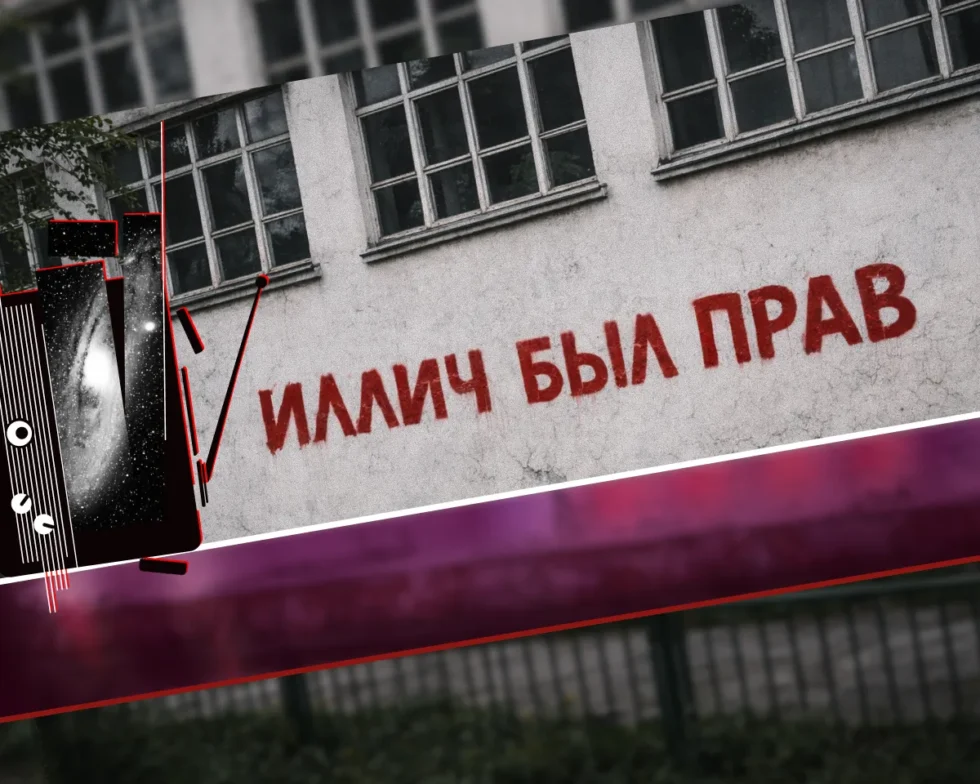
Back in 1971, radical thinker Ivan Illich explained that traditional schooling is an apparatus of discipline and subordination, not an educational institution. The state system turns the lively creative process of learning into a one-way compulsory cramming for a certificate, without which a person is deprived of the right to professional realization.
True intellectual freedom, according to Illich, lies in P2P education. Just as cryptocurrencies have excluded banks from value exchange, society should create networks of horizontal exchange of real skills — where mathematics can be directly exchanged for Spanish lessons. This would forever eliminate bureaucracy from the process of developing the human mind.
More details in the video:
Subscribe to the podcast:
Apple Podcasts
Spotify
YouTube
Deezer
Yandex Music
YouTube Music