




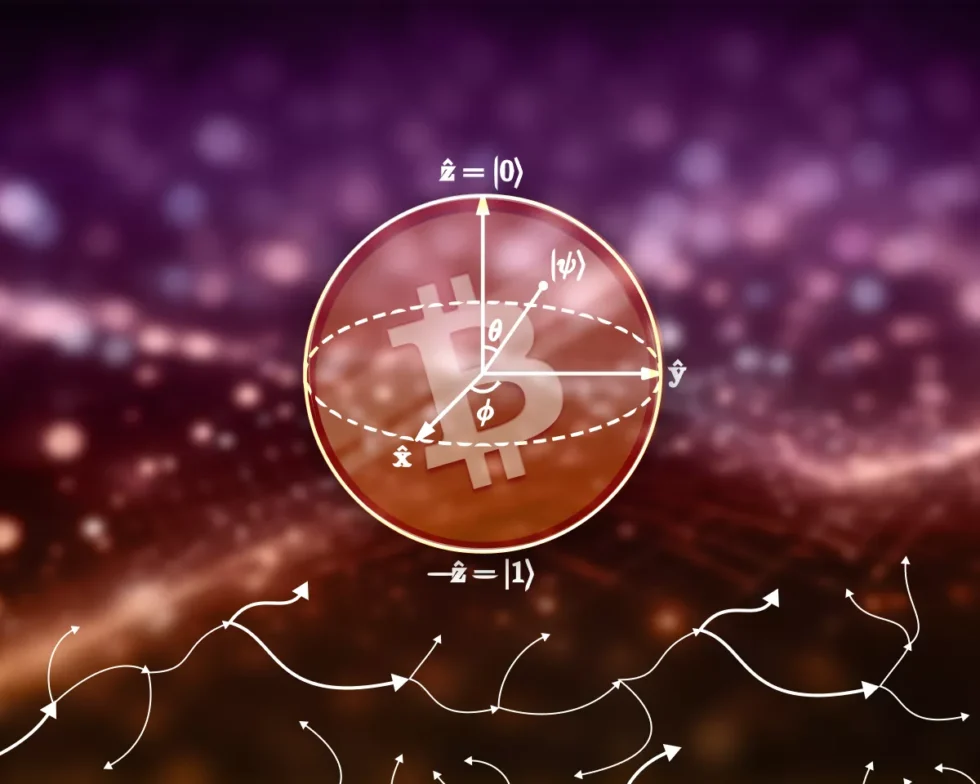

Galaxy has launched a program to prepare Bitcoin for potential threats from quantum computers. It will award up to $5 million in grants to developers and researchers.
Today we’re launching the Galaxy Bitcoin Quantum Readiness Initiative.
No quantum computer today can break Bitcoin’s security. But that could change faster than expected, and Bitcoin is slow to update by design. We love Bitcoin and believe in its long-term importance and… pic.twitter.com/DGYFwRmddJ
— Galaxy (@galaxyhq) July 21, 2026
The Bitcoin Quantum Readiness Initiative also includes a research program and an advisory board of experts in quantum computing and post-quantum cryptography.
Galaxy began accepting applications immediately after launch. Projects will be assessed individually, with funds disbursed in stages as agreed milestones are met.
The company outlined four priority areas:
- developing and testing quantum-resistant transaction types;
- introducing post-quantum digital signature schemes into Bitcoin;
- building migration tools for wallets and custodians;
- auditing the security of proposed solutions.
Galaxy Research will publish materials on quantum risks to Bitcoin and ways to mitigate them. The research is intended for developers, institutional investors, and government officials.
The advisory board will review applications and set research priorities. Its members include Barry Sanders, scientific director of Quantum City at the University of Calgary; Damien Berube, a Knauss fellow at MIT Sea Grant; and Eran Tromer, professor of computer science at Boston University.
“There is a gap between rapidly advancing quantum computing and Bitcoin development, which is only beginning to take post-quantum cryptography seriously,” Galaxy head of research Alex Thorn said.
He said the company aims to close that gap by publishing research and funding developers.
No immediate threat
Bitcoin uses elliptic-curve cryptography to create digital signatures. A sufficiently powerful quantum computer could theoretically derive private keys from exposed public keys and sign others’ transactions.
A cryptographically relevant quantum computer capable of such an attack does not yet exist. Galaxy believes the expected timeline for one is shortening.
The main risk involves digital signatures and wallets whose public keys have already been revealed on the blockchain. According to an assessment by Coinbase’s advisory council, mining, hash functions, and the blockchain’s history do not face a comparable immediate threat.
Preparation is complicated by Bitcoin’s decentralized governance. Any protocol upgrade must be developed, reviewed, tested, and agreed by network participants, so migration could take years.
U.S. accelerates transition to new algorithms
In August 2024, the U.S. National Institute of Standards and Technology (NIST) approved the first three post-quantum cryptography standards — FIPS 203, FIPS 204, and FIPS 205.
On June 22, 2026, U.S. President Donald Trump signed an order to accelerate the migration of federal information systems to NIST-approved algorithms. Coordination was assigned to the Office of Management and Budget (OMB) and the Office of the National Cyber Director.
On June 24, OMB issued memorandum M-26-15 to implement the order. Agencies must reduce the maximum practicable quantum risk exposure by December 31, 2030.
Priority systems are scheduled to adopt post-quantum key establishment mechanisms in 2028–2030, with digital signature migration in 2031. Remaining systems are expected to move to the new algorithms by 2035.
Two proposals under discussion in Bitcoin
Developers are considering two protocol change proposals — BIP-360 and BIP-361.
BIP-360 proposes a new Pay-to-Merkle-Root (P2MR) output type. It is similar to the Taproot construction but omits the spend path via the internal public key, which is vulnerable to a prolonged quantum attack.
P2MR is designed to protect against a scenario where an attacker has extended time to compute a private key from already published data. Post-quantum digital signature schemes would still be needed to protect a transaction while awaiting network confirmation.
BIP-361 describes subsequent migration and the gradual deprecation of ECDSA and Schnorr signatures. The proposal was authored by Jameson Lopp and five co-authors.
At the first stage, roughly three years after a potential activation of BIP-361, sending funds to quantum-vulnerable address types would be prohibited. Two years later, spending from such addresses would be tied to a special recovery mechanism intended to make theft via a quantum computer more difficult. Activation parameters have not yet been determined.
Coinbase joins preparation
In January, Coinbase formed an independent advisory board on quantum computing and blockchain. It assesses threats, prepares recommendations, and analyzes significant developments in the field.
In April, the experts published a first report. They saw no immediate threat to blockchains but recommended starting preparations early because updating protocols, wallets, and infrastructure could take years.
In June, the Coinbase council outlined scenarios for quantum migration of bitcoins. According to the experts’ estimates, up to 7 million BTC could be at risk in total. Around the same time, several experts pointed to the challenges of post-quantum protection for the first cryptocurrency.
Some ecosystems are already publishing more centralized plans. In June, Stellar Development Foundation introduced its document, and Algorand Foundation also published a roadmap.
Nicolas Consigny, lead of the Kohaku project at the Ethereum Foundation (EF), proposed a concept to protect accounts from quantum-computer attacks. A solution called SPHINCS- would secure wallets without a hard fork.
In January, the EF announced post-quantum security as one of its main strategic priorities and formed a dedicated team of developers.