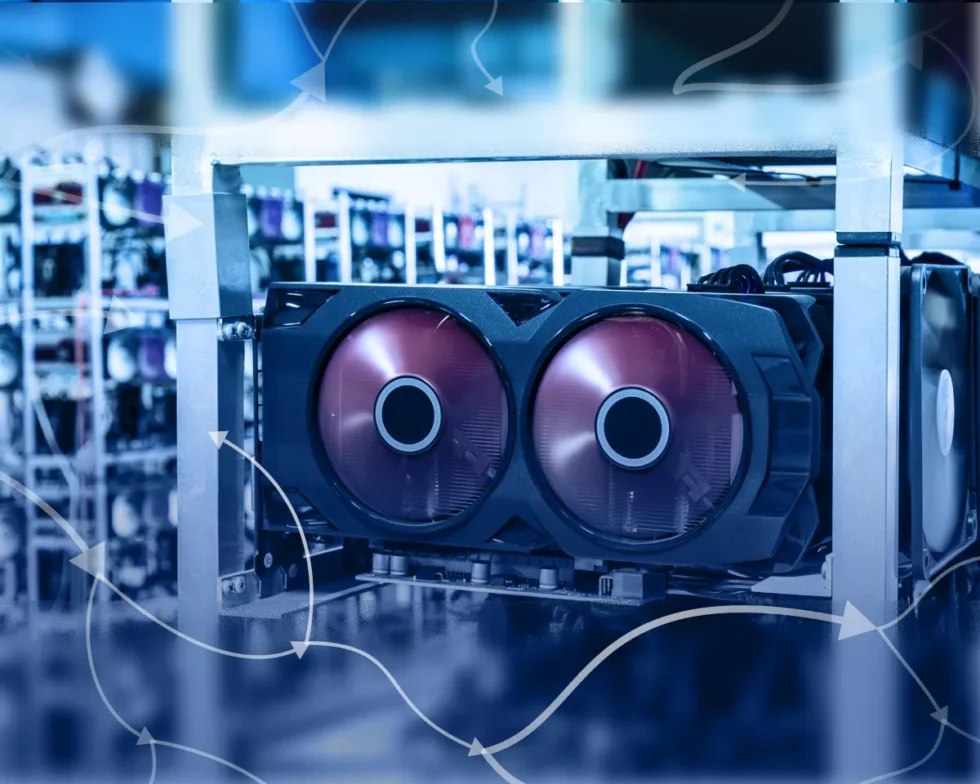
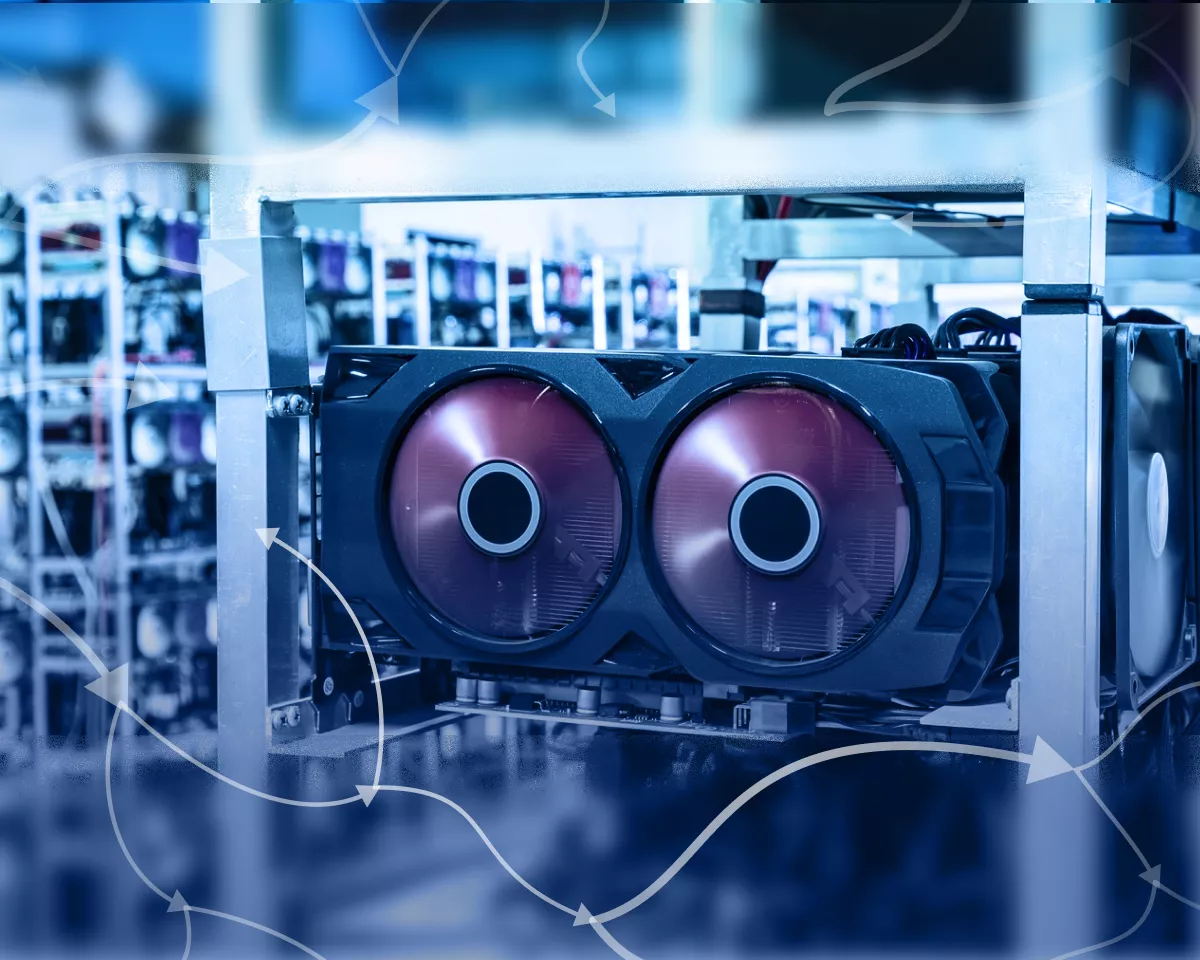
Mike Alfred, founder of Alpine Fox, stated at the Energy Investors Forum in Dallas that he does not view the boom in artificial intelligence infrastructure as a bubble, according to TheEnergyMag.
However, the investor warned that for Bitcoin miners, diversifying into AI involves a choice: sell facilities and energy or take on the additional risk of purchasing GPU.
Alfred expressed confidence that demand for AI infrastructure will remain strong for the next 20–30 years, even if the market experiences corrections and economic downturns.
He described the key decision for miners as choosing an operational model. The first option is to own GPUs on their own sites. This offers the potential for higher revenue and greater control but significantly raises the stakes: operators must finance equipment purchases, account for the risk of rapid chip obsolescence, and ensure constant capacity utilization.
“If you decide to own them, you must have a compelling reason,” the expert emphasized.
The second option is colocation. Clients install their own servers and chips, while the site owner sells space, electricity, water, and cooling for the hardware. Alfred called this model more conservative and compared it to real estate, noting that it is much easier to secure financing for it.
Alfred serves as a non-executive director on the board of IREN. He stated that about 80% of Alpine Fox’s investments are concentrated in IREN and Cipher Digital.
Both companies started as Bitcoin miners and later expanded into the AI sector. Recent deals in this area include IREN’s five-year agreement with Microsoft, worth approximately $9.7 billion, to supply cloud infrastructure using Nvidia GB300 chips, and Cipher’s 10-year contract with Fluidstack for equipment placement and 168 MW of power at the Barber Lake site in Texas.
Most Bitcoin Mining Sites Not Ready for AI
A significant portion of existing cryptocurrency mining facilities are difficult and expensive to convert into AI data centers. This conclusion was reached by participants in a thematic panel at the Energy Investors Forum.
The forum discussed the concept of a model where mining acts as a flexible load:
- temporarily monetizing unused electricity during the construction phase of an AI campus or absorbing excess generation;
- shutting down when power is needed for more expensive computations.
Jay Zapata, founder and CEO of SATOKIE, noted that in competition for a suitable substation, cryptocurrency mining will always lose out to AI in terms of business attractiveness.
According to observations by TheEnergyMag, investors are increasingly evaluating miners based on available capacity and project portfolios, not just Bitcoin production volume. Examples cited include TeraWulf’s July agreement with Anthropic for a 20-year campus in Hawesville, Kentucky, with approximately 401 MW of critical IT capacity and expected revenue of about $19 billion, as well as Galaxy Digital’s 15-year deal with CoreWeave for the Helios facility in West Texas, offering 133 MW and around $4.5 billion in revenue. Both cases are closer to a full pivot towards AI rather than sustainable coexistence of the two models.
Zapata estimated the construction of a mining site at $200,000–300,000 per MW compared to more than $10 million per MW for AI infrastructure, excluding chips. He stated that the intermediate model only works with cheap electricity: at $0.06–0.08 per kWh, mining economics become challenging, and developers are better off going directly into AI or simply maintaining access to capacity without mining revenue.
Panelists emphasized that electricity for an AI project is just the start. Typical mining facilities are often located in remote areas, built to simplified standards, and have limited redundancy. AI tenants require redundant fiber-optic lines, backup generation, complex cooling, water, large plots for development, and service availability at around 99.999%.
Compass Mining’s Director of Mining, Shannon Squires, stated that after evaluating numerous new sites for Tier 3 data centers, it became clear that the vast majority are unrealistic for this purpose. According to him, the intersection of the two models mainly ends at the land, substation, and step-down transformers.
Speakers identified sites with their own generation as a more sustainable version of the hybrid model. Steve Barbour, head of Upstream Data, noted that gas power plants are often built with excess capacity, which mining can use while the AI site utilizes guaranteed round-the-clock load. In this way, digital asset mining remains a secondary consumer and can quickly shut down without violating service obligations.
However, panelists considered expensive GPUs less suitable for such flexibility, and long-term AI contracts carry the risk of concentration. According to all four speakers, by the next Bitcoin halving in 2028, at least one major tenant, lender, or lessor in the AI segment may default or terminate a contract.
Public Bitcoin miners are increasingly converting energy capacities and data centers into infrastructure for artificial intelligence, according to data from Stanford University.