




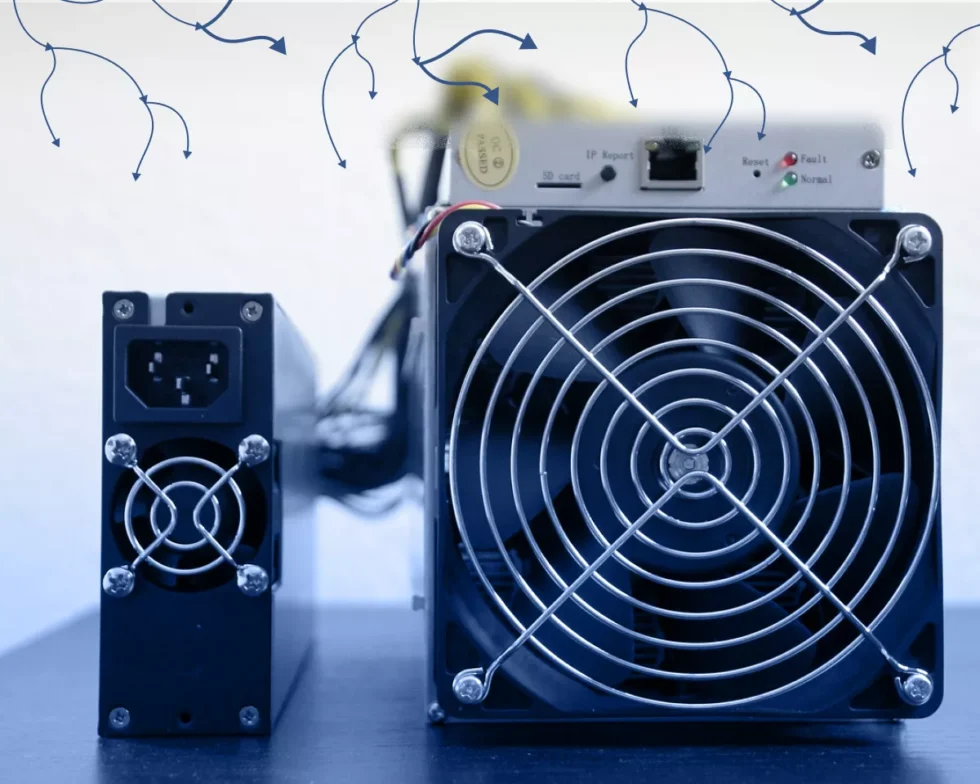
Bitdeer will deploy 28 MW of bitcoin mining at Soluna’s wind-powered site in Texas. Equipment installed at the Kati 1 facility is expected to add about 1.93 EH/s of hash rate for the company.
Wind-powered mining
Deployment will begin in September and proceed in stages. The key feature of the project is its energy source. Kati 1 is a wind-powered data center connected to the Las Majadas wind farm. The site’s total capacity is 83 MW.
Bitdeer will supply its in-house Sealminer A2 Pro Air ASIC miners. Soluna will provide the site, power, and operations. The companies will share mining revenue. Financial terms and the duration of the agreement were not disclosed.
What the project will deliver
Once all planned equipment is installed, Bitdeer is expected to add about 1.93 EH/s to the site’s hash rate. Kati 1 is designed for a much larger scale: Soluna previously estimated the project’s potential at 3.5 EH/s.
For the data center operator, the deal is another way to monetize available renewable electricity through compute. The company builds infrastructure directly next to power sources and uses it for bitcoin mining and, over time, AI and HPC.
In this model, cryptocurrency mining consumes wind power at the point of generation, turning available capacity into compute without the need to build separate infrastructure for traditional customers.
At the same time, Soluna is gradually diversifying the model. The second phase of Kati is planned for more than 100 MW of AI/HPC infrastructure.
This year, Bitdeer overtook the longtime leader MARA in bitcoin mining capacity. As of June 30, the company’s operating hash rate reached 73 EH/s, up more than 340% over the past 12 months.

This occurred against the opposite trend in the segment: excluding Bitdeer, since the fourth quarter of 2025 public miners reduced realized hash rate by 21%.
Bitcoin difficulty is flat
On August 23, after the latest adjustment, bitcoin’s mining difficulty decreased by 1.3% to 125.81 T.

Source: 2Miners.
The metric returned to mid-February levels (125.86 T).
Bitcoin’s hash rate (7-day moving average) stands at 867.4 EH/s. Network computing power has been trending lower since October 2025, when it reached 1.15 ZH/s amid the cryptocurrency’s all-time high price.

Miners continue to pivot to AI
In the first six months of 2026, 15 publicly listed bitcoin miners and AI infrastructure operators spent $30.7 billion on equipment. That is 42.6% more than in all of 2025, according to BlocksBridge Consulting.
Nine miners in the sample increased revenue from HPC, AI cloud and colocation by 52% in the second quarter — to $205.8 million from $135.4 million in the prior quarter. The sample included Core Scientific, TeraWulf, Bitdeer and IREN.
TeraWulf in August received approval from Kentucky’s regulator for power supply to the Justified Data Campus data center with capacity of 482 MW. The company plans to use the site to fulfill a 20-year contract with Anthropic to provide 401 MW of critical IT load.
The agreement is expected to bring TeraWulf about $19 billion in revenue in the first phase alone. The company estimates data center development and construction costs at $4–4.5 billion, based on a projected $10–12 million per MW.
Earlier, Bitdeer signed a five-year contract worth about $400 million with an undisclosed client. The agreement covers roughly half of the A102 data center’s capacity in Malaysia.