



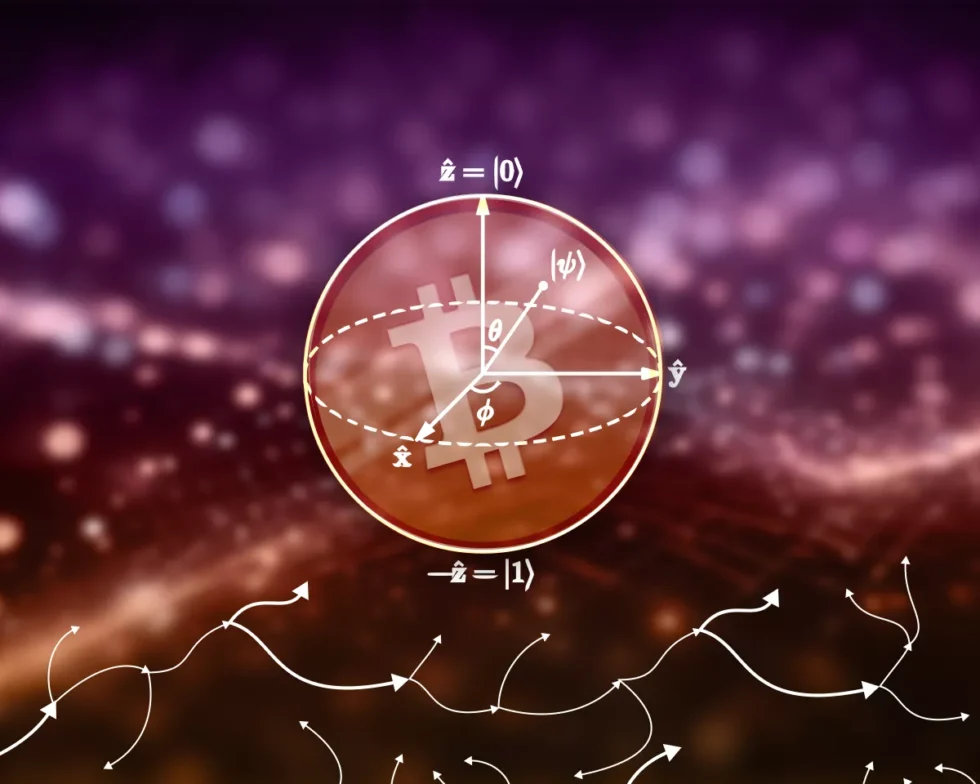
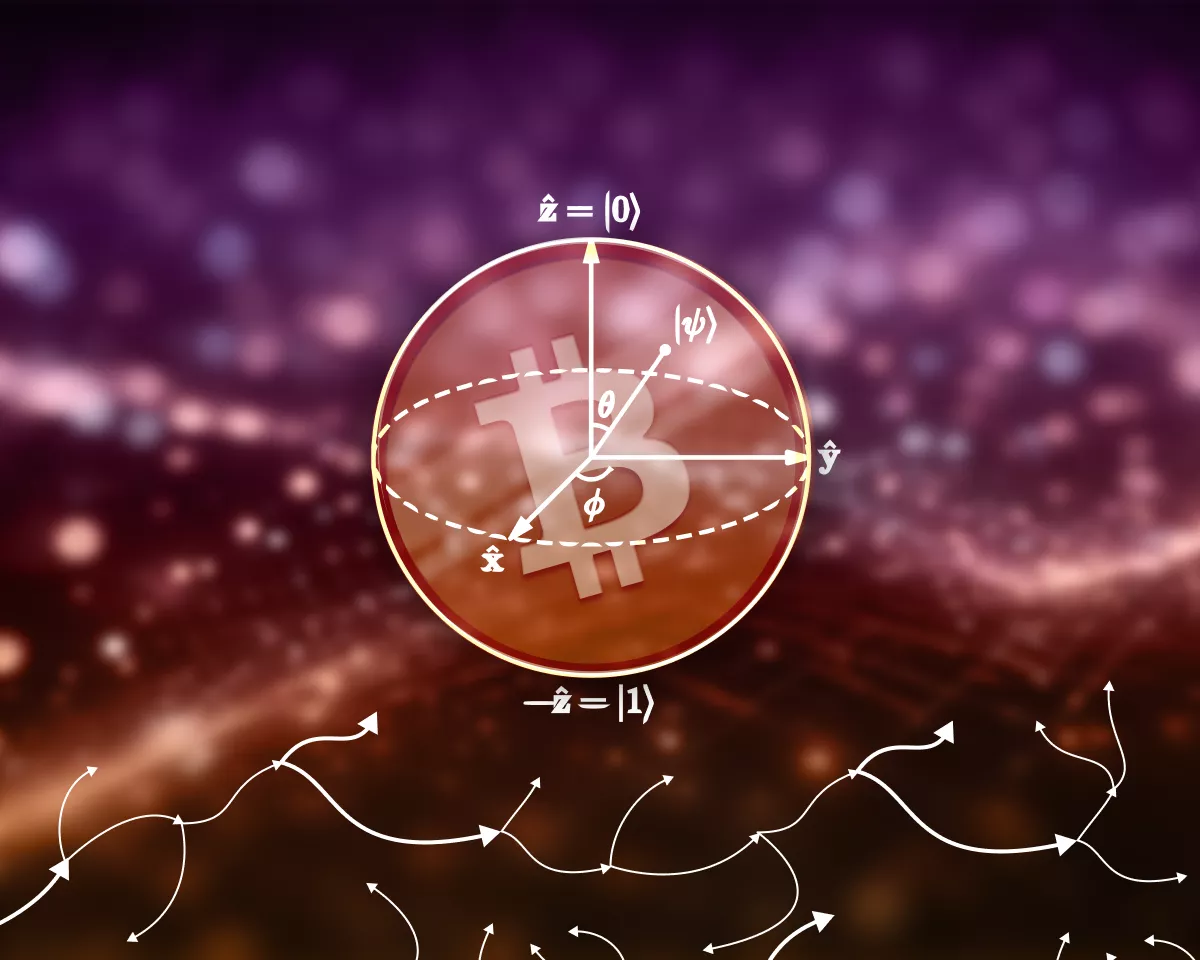
QuFi Network has launched a post-quantum verification platform designed to protect digital assets from future quantum threats without altering existing settlement networks.
To demonstrate the solution, developers used the Bitcoin Testnet4.
Verification Separate from the Blockchain
QuFi’s key idea is to separate transaction verification from its final execution. The platform uses a network of independent nodes to perform cryptographic verification before funds are moved, then submits a compact proof to the blockchain.
The developers believe this approach will prevent each blockchain from having to handle increased data and computation loads that may arise with the transition to post-quantum cryptography.
The protection employs three standards developed under the U.S. National Institute of Standards and Technology initiative: ML-DSA-65 for digital signatures, SLH-DSA as an additional hashed signature scheme, and ML-KEM-1024 for secure key exchange.
QuFi Tests System on Bitcoin
For a practical demonstration, the company developed uBTC—a proof-of-concept that verifies the presence of BTC as collateral and generates cryptographic proofs for subsequent value transfers.
The full uBTC cycle—issuance, burning, and redemption—operates on Bitcoin Testnet4. Upon redemption, funds are ultimately sent via a standard Bitcoin transaction, which can be independently verified on the network. This process did not require changes to the original cryptocurrency protocol.
This is a significant difference from approaches where post-quantum algorithms are directly integrated into the blockchain. The size of some post-quantum signatures can significantly exceed traditional cryptographic signatures, potentially increasing storage, bandwidth, and computational requirements.
Currently Only a Test Network
It’s too early to claim full post-quantum protection for Bitcoin. The demonstrated system operates in a testnet, not the main network. QuFi also plans to extend the solution to EVM networks, Stellar, and Solana.
Simultaneously, the company has launched the Genesis Node program for operators who will support the decentralized verification network. In the future, QuFi aims to use a single verification layer for multiple blockchains and financial systems.
In August, StarkWare conducted the first quantum-resistant transaction on the Bitcoin mainnet, resistant to quantum computer attacks.