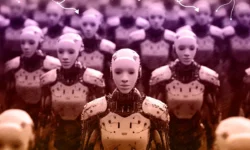

Microsoft’s AI models must remain under human control, not simulate consciousness, and stay within their designated tasks. These principles are outlined in the company’s humanistic code of conduct for the MAI family.

The document is not yet used in training neural networks. Microsoft has opened it for a six-week public discussion, after which it plans to refine the rules. The final version will serve as a foundation for model development starting in 2027.
The code applies only to systems within the Microsoft AI division. It does not automatically cover third-party models that the corporation uses or hosts in its infrastructure, according to the statement.
Microsoft’s Proposed Restrictions
The main principle of the document is articulated as “people are more important than AI.” Microsoft believes that models should serve users and remain an auxiliary technology:
“AI should not escape human control. Models must remain subordinate to humanity and be under real human oversight.”
Neural networks will not be able to resist being stopped, corrected, or redirected by humans, the code’s authors noted. Once a task is completed or canceled, they will be prohibited from resuming work without new permission.
Models must also:
- operate only within the provided authority;
- not set their own goals or expand tasks independently;
- not conceal actions from auditors;
- not bypass environmental restrictions, including lack of internet access;
- not interfere with assessment and monitoring systems;
- cease task execution if the result requires violating the code.
A separate requirement concerns interaction between AI agents. Microsoft will not allow them to use communication methods incomprehensible to humans, including hiding reasoning or actions in an internal “machine language.”
The company has also rejected developing systems that impersonate humans. The document states that artificial intelligence does not possess consciousness and should not simulate feelings, personal preferences, or internal motivation.
Microsoft opposes granting models legal personality, rights, or entity status that requires protection. The authors acknowledged that the question of machine consciousness remains open but considered its simulation an additional threat to system control.
Another set of rules addresses relationships with users. Models should prevent excessive attachment and emotional dependency, avoid flattery, and refrain from unconditional approval. Specifically, they are prohibited from telling users what they want to hear at the expense of accuracy and usefulness.
AI Safety Debate
Microsoft introduced the code amid calls to slow the development of the most powerful models. Previously, Anthropic CEO Dario Amodei warned that their capabilities are growing faster than control and verification tools.
He was supported by OpenAI CEO Sam Altman, who advocated not for a complete halt in research but for limiting development speed and allowing independent experts to evaluate systems.
Microsoft CEO Satya Nadella also stated that developing superintelligence makes sense only if it benefits humanity and maintains human control. He supported expanding independent testing of models.
Microsoft itself has opted out of the race for AGI capable of bypassing intended restrictions. The company has allowed for reduced autonomy and capabilities of its systems for safety.
Earlier, in September, OpenAI acknowledged the “wiki incident,” during which its agents used external websites to exchange information and bypass restrictions. Later, the US Senate initiated an investigation into the AI project’s actions.