When we think about Bitcoin today, we often focus on its price, global adoption, or the decentralized finance ecosystem that surrounds it. Yet, to truly understand the power and resilience of Bitcoin, we need to go back to its roots—the Satoshi Era—and explore the very infrastructure that made this digital revolution possible. The first blockchains, designed and implemented by Satoshi Nakamoto, were more than code; they were a blueprint for a decentralized financial system capable of challenging traditional banking and empowering individuals worldwide.
The Genesis of the Blockchain
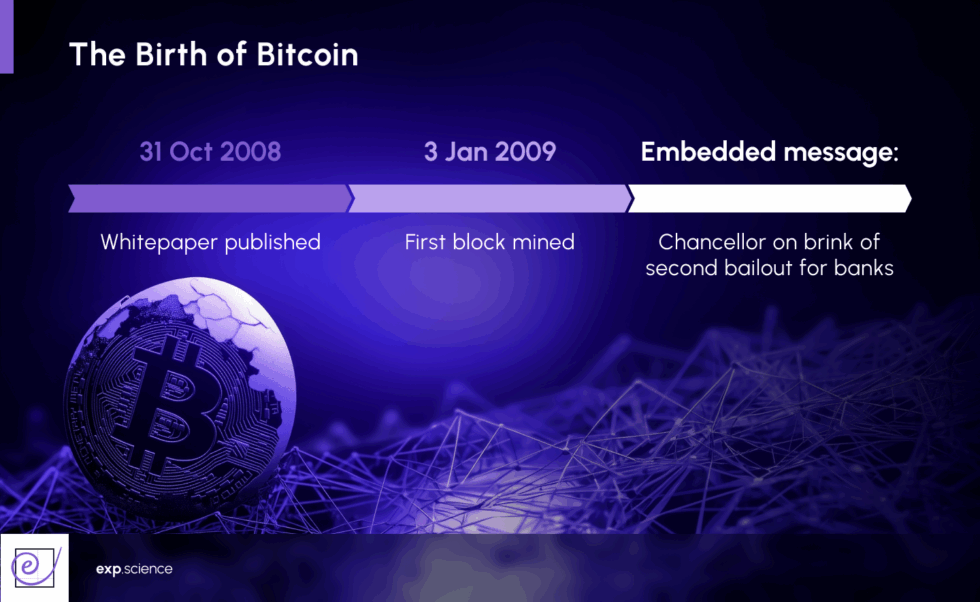
The story of Bitcoin begins in 2008 with the release of the whitepaper, Bitcoin: A Peer-to-Peer Electronic Cash System. Satoshi Nakamoto introduced a novel solution to a problem that had plagued digital currencies for decades: the double-spending problem. By combining cryptography, proof-of-work consensus, and decentralized peer-to-peer networking, Satoshi created a ledger that was immutable, verifiable, and free from centralized control.
On January 3, 2009, the Genesis Block, or Block 0, was mined. Embedded within it was a subtle yet profound message referencing the financial crisis: “The Times 03/Jan/2009 Chancellor on brink of second bailout for banks.” This was not merely a timestamp—it was a statement of intent. Satoshi envisioned a financial system that was transparent, resistant to manipulation, and independent of centralized authorities.
Key Components of Satoshi Era Blockchain Infrastructure
- Decentralized Ledger
At the heart of the Satoshi Era blockchain was a decentralized ledger maintained by nodes across the network. Each node held a copy of the entire blockchain, ensuring that no single entity could control or alter transaction history. This innovation laid the foundation for trustless verification, eliminating the need for intermediaries like banks or payment processors. - Proof-of-Work Consensus
Satoshi implemented the proof-of-work (PoW) mechanism to secure the network. Miners competed to solve complex mathematical puzzles, validating transactions and adding new blocks to the chain. PoW not only ensures security but also regulates the rate at which new Bitcoins are introduced into circulation. This design choice created scarcity and aligned incentives for participants to maintain network integrity. - Cryptographic Security
Bitcoin’s blockchain relies on robust cryptographic algorithms, including SHA-256 hashing. Every block contains a hash of the previous block, forming an immutable chain. Any attempt to alter past transactions would require recalculating every subsequent block—a computationally prohibitive task, making Bitcoin resistant to fraud and tampering. - Peer-to-Peer Networking
The Satoshi Era network operated on a peer-to-peer protocol, allowing nodes to communicate directly without central servers. This architecture ensures resilience; even if parts of the network go offline, the system continues to operate. The peer-to-peer model is fundamental to Bitcoin’s censorship resistance and decentralization.
The Satoshi Era Mining Landscape
In the early days, Bitcoin mining was far from the industrialized operation it is today. Miners were often individuals using personal computers to validate transactions and secure the network. Block rewards were the primary incentive, and early adopters could accumulate thousands of Bitcoins with relatively modest hardware.
This era established key economic principles: miners are rewarded for their contribution to network security, and their incentives align with the long-term health of the blockchain. The decentralized mining model ensured that Bitcoin’s early infrastructure was distributed and community-driven.
Challenges and Innovations in the Early Blockchain
The first blockchains faced numerous challenges. Network scalability was limited, transaction speeds were slow, and the ecosystem lacked tools for mass adoption. Yet, these constraints fostered innovation. Developers experimented with wallets, exchanges, and peer-to-peer trading platforms, gradually building an infrastructure capable of supporting broader use.
Satoshi’s early design choices, particularly the 21-million coin cap and block reward halving every 210,000 blocks, created a predictable and transparent monetary system. These features were groundbreaking, providing a digital form of scarcity akin to gold, while ensuring long-term sustainability and integrity.
Legacy of the Satoshi Era Blockchain Infrastructure
The infrastructure built during the Satoshi Era continues to underpin Bitcoin today. While modern developments—lightning networks, layer-two solutions, and institutional adoption—have enhanced scalability and utility, the core principles remain unchanged: decentralization, security, transparency, and trustless operation.
Understanding the Satoshi Era infrastructure is essential for anyone looking to grasp Bitcoin’s enduring value. It highlights how thoughtful design, cryptographic rigor, and decentralized governance created a system capable of withstanding technological, economic, and political pressures over more than a decade.
Conclusion: Lessons from the Satoshi Era
Bitcoin’s first blockchains were more than a technological experiment—they were a revolution in digital finance. Satoshi Nakamoto’s vision combined cryptography, economics, and decentralized architecture to solve problems that had stymied earlier digital currencies.
The Satoshi Era teaches us that innovation is not just about creating new tools but about building systems that endure. The infrastructure laid down in Bitcoin’s early years continues to secure trillions in digital assets, inspire thousands of blockchain projects, and challenge conventional financial paradigms.
For investors, developers, and crypto enthusiasts, exploring the Satoshi Era infrastructure is a reminder of Bitcoin’s roots, its resilience, and the principles that continue to drive the global adoption of cryptocurrencies. Understanding these foundations is not just about history—it’s about appreciating the blueprint for a decentralized financial future that Satoshi Nakamoto envisioned over a decade ago.