

In 2025, Ethereum’s network activity reached unprecedented levels, yet the asset’s price plummeted by over 50% from recent peaks, according to analysts at CryptoQuant.
Experts pointed out a clear discrepancy between the blockchain’s demand and the coin’s value.
The daily number of active addresses surpassed the figures from the bull market of 2021. Users are increasingly interacting with smart contracts, and the number of token transfers has reached record highs. The main growth drivers have been the DeFi segment, stablecoins, and L2 solutions.
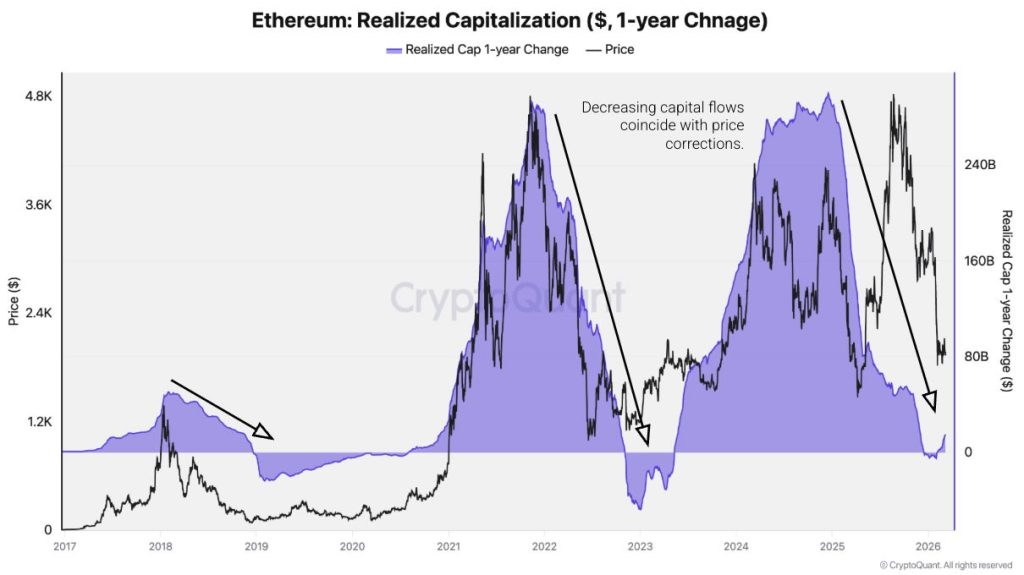
Analysts explained the gap between fundamental metrics and the exchange rate as a result of investment outflows. Capital flows, rather than user growth, dictate price movements.
An additional negative factor was the mass transfer of ether to exchanges, which accelerated the decline in the ETH/BTC pair and confirmed increased selling pressure.
The systemic withdrawal of capital is also reflected in the dynamics of realized capitalization: its annual change has turned negative. It is the movement of investor funds, not network activity, that currently dictates the cryptocurrency’s price.
According to DefiLlama, over the past 30 days, Ethereum generated $10.29 million in fee revenue. This places it third in the market after TRON ($24.96 million) and Solana ($20.14 million).
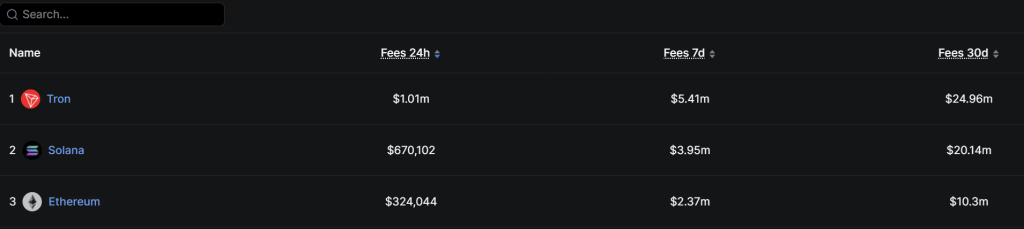
In terms of net revenue, the blockchain ranked only fifth with $1.22 million. Ethereum lagged behind TRON, Polygon, Base, and Solana. Meanwhile, Coinbase’s L2 network Base earned three times more revenue than Ethereum in the same month.
The imbalance is attributed to the development of second-layer solutions. L2 networks handle large volumes of transactions but pay minimal fees for their recording on the main blockchain. As a result, economic activity is “diluted” across the ecosystem, depriving the main network of revenue.
Despite the decline in revenue, Ethereum maintains its leadership in the stablecoin segment. Assets worth approximately $162 billion are hosted on the blockchain, accounting for 52% of the global market.
Analysts conclude that although the network is busier than ever, the native token no longer directly benefits from this activity.
Back in March, experts at Culper Research predicted a “death spiral” for Ethereum and opened a short position.