




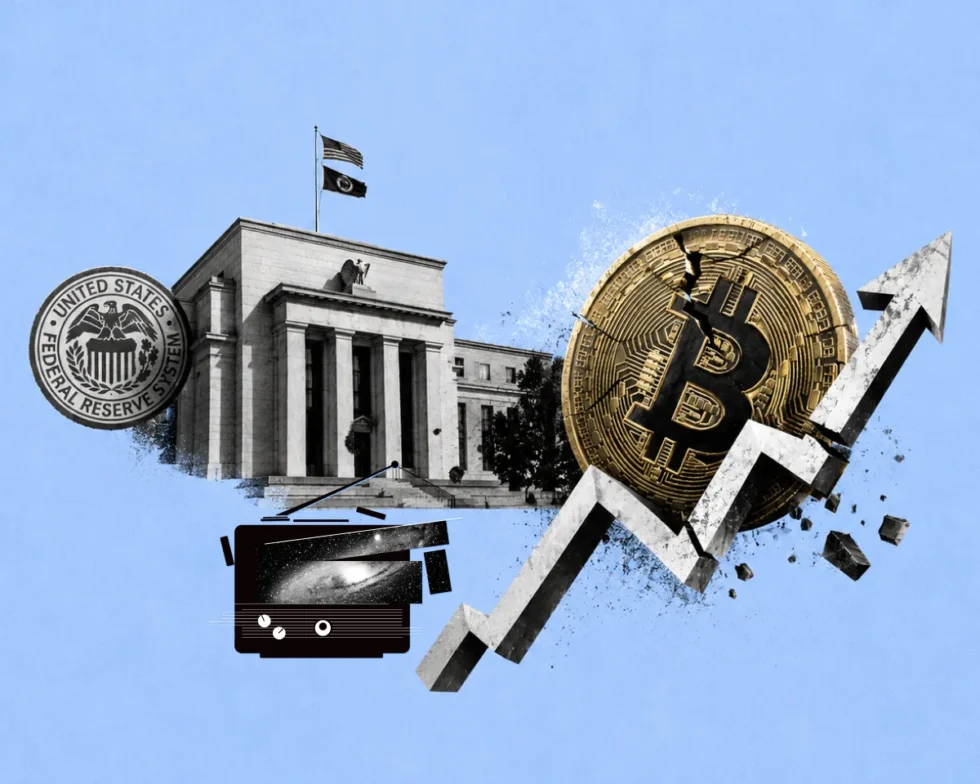

This week’s “Deconstruction” focuses on Ethereum’s new roadmap, the Federal Reserve’s hawkish shift, Strategy’s Bitcoin sale, and Solana’s contradictions.
Ethereum Undergoes Radical Changes
Vitalik Buterin summarized the outcomes of a researchers’ meeting in Berlin and introduced an updated roadmap under the Lean Ethereum concept—marking the network’s “third major iteration.”
The upgrade priorities include quantum resistance, privacy, and data storage restructuring.
The most radical change could be the potential shift from EVM to RISC-V or leanISA architectures. Block verification will transition to recursive STARK proofs.
Fed Adopts a Tougher Stance
The minutes from the June FOMC meeting revealed a noticeably more hawkish sentiment within the Fed. Most participants no longer expect a rate cut by the end of the year. Several members argued for a rate increase.
Among the factors for persistent inflation, the minutes specifically mention the rapid growth of AI investments—chip shortages, rising equipment prices, and data center construction. For the crypto market, this means competition between miners and AI data centers for a single resource—cheap electricity.
Strategy Sells Bitcoin
The company sold 3,588 BTC for $226 million. Strategy explained the sale as necessary to finance quarterly dividends on preferred shares. This marks the first time the largest corporate Bitcoin holder has used part of its reserve as a financial instrument.
Meanwhile, Bloomberg reports that the process of creating a strategic U.S. Bitcoin reserve has effectively stalled. There is no agreed management model, storage mechanisms, or defined agency powers.
Solana: A Split Identity
By 2026, Solana found itself in a state of split identity. The network simultaneously hosts corporate payment products and toxic meme coin schemes, institutional integrations, and wash trading.
The network’s main focus is the agent economy. Autonomous AI systems require fast, cheap, and programmable payments, and Solana is technically better prepared for this than its competitors. However, the narrative crisis will not resolve itself.
This is a shortened version of the podcast. Watch the full episode:
Subscribe to the podcast:
Apple Podcasts
Spotify
YouTube
Deezer
Yandex Music
YouTube Music